Why Waterjet Shops Need Digital Workflows, Not Just Faster Machines
Walk through almost any fabrication shop and you’ll hear conversations about speed. Faster cutting. Faster throughput. Faster delivery. The assumption is often that productivity comes from the machine itself. But in many operations, the biggest opportunities for improvement happen before the first cut is ever made.
A faster machine can reduce cycle time, but a digital workflow can reduce delays throughout the entire production process. That is where work efficiency becomes just as important as cutting speed. Today’s manufacturers face growing pressure to do more with less. Skilled labor remains difficult to find, lead times continue to shrink, and customers expect consistent quality whether a shop is producing one part or one thousand. Meeting those demands requires more than machine performance alone. For OMAX waterjet shops, IntelliMAX helps connect design, programming, production, and machine operation into a single workflow.
The Real Bottlenecks Often Occur Before Cutting Begins
When productivity is discussed, cutting speed tends to receive most of the attention. Yet many jobs spend more time moving through engineering, estimating, programming, setup, and troubleshooting than they do under the cutting head.
A shop may have an advanced OMAX waterjet system capable of producing highly accurate parts, but if operators spend significant time importing files, creating toolpaths, calculating cut parameters, or verifying settings, valuable production hours are lost.
These workflow interruptions may seem small individually. But together, they can create significant delays across dozens of jobs each week. Digital workflows help eliminate many of these manual steps by automating repetitive tasks and standardizing the path from design to production.
The goal is not simply to cut parts faster. The goal is to move jobs through the entire manufacturing process more efficiently.
Digital Workflows Connect the Entire Production Process
Manufacturing software has evolved well beyond basic machine control. Modern waterjet software can connect multiple stages of production into a streamlined workflow. With OMAX IntelliMAX software, CAD files can be imported directly into the programming environment. Toolpaths can be generated automatically. Cutting parameters can be optimized based on material type, thickness, and required edge quality.
Instead of relying on multiple disconnected systems or spreadsheets, OMAX operators can work within a unified environment that helps maintain consistency from one job to the next.
When information flows smoothly between engineering and production, shops often experience fewer mistakes, less rework, and improved communication across teams. The benefit extends beyond efficiency. Digital workflows help create repeatable processes that are easier to manage and easier to scale.
What a Digital Waterjet Flow Looks Like
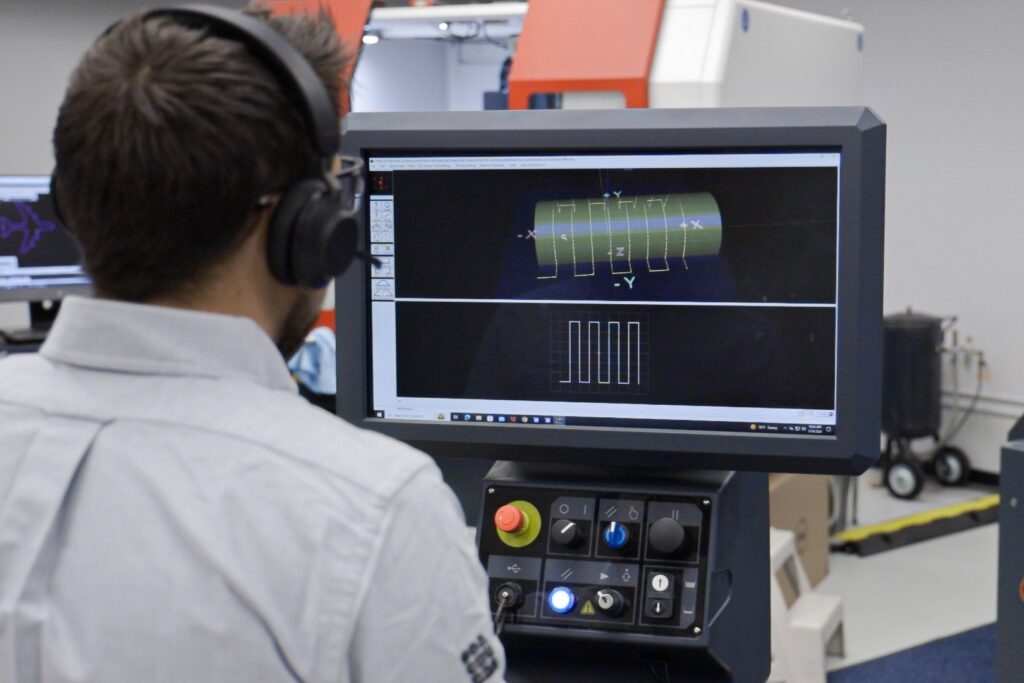
In practical terms, a digital waterjet workflow is the connected process of moving a job from design file to finished part using software to manage programming, cutting parameters, machine operation, monitoring, and production data. Instead of treating each step as a separate handoff, the workflow keeps information moving through the shop with less manual entry and fewer opportunities for error.
For an OMAX waterjet user, that can mean importing CAD files into waterjet programming software, generating toolpaths, applying optimized cutting parameters, setting up the machine, monitoring performance, and using job data to support future planning. Each step contributes to work efficiency by helping operators spend less time recreating information and more time producing accurate parts.
Consistency is Often More Valuable than Speed
Many manufacturers focus on reducing cycle times, but consistency can have an even greater impact on productivity. An operation that produces accurate results every time generally spends less effort correcting mistakes, adjusting programs, or remaking parts. This is where automation within software becomes particularly valuable.
Rather than depending entirely on operator experience to determine cutting parameters, IntelliMAX software can automatically apply settings based on proven cutting data. IntelliMAX helps operators generate toolpaths using established rules and optimized settings for the specific application. As a result, different operators can achieve similar outcomes using the same workflow.
That consistency becomes especially important for shops running multiple shifts, managing high part volumes, or training new personnel.
Digital Workflows Help Address Manufacturing Labor Challenges
Finding experienced manufacturing personnel remains a challenge across much of the industry. As veteran operators retire, many companies face the loss of years of accumulated knowledge and expertise. Training new employees can take time, particularly when production processes rely heavily on tribal knowledge.
Digital workflows help capture and standardize many of those processes. Instead of requiring operators to manually determine every programming and machine control decision, OMAX software can guide users through established workflows and automate many routine tasks.
Additionally, OMAX offers online and in-person training options that help operators build confidence with both the waterjet system and the software, giving shops another way to shorten the learning curve while reinforcing consistent practices.
New employees are often able to become productive more quickly because IntelliMAX software helps reduce complexity and provides a more structured process. Experienced operators still play a critical role, but their expertise can be leveraged more effectively when software handles repetitive activities that do not require manual intervention.
Better Data Leads to Better Business Decisions
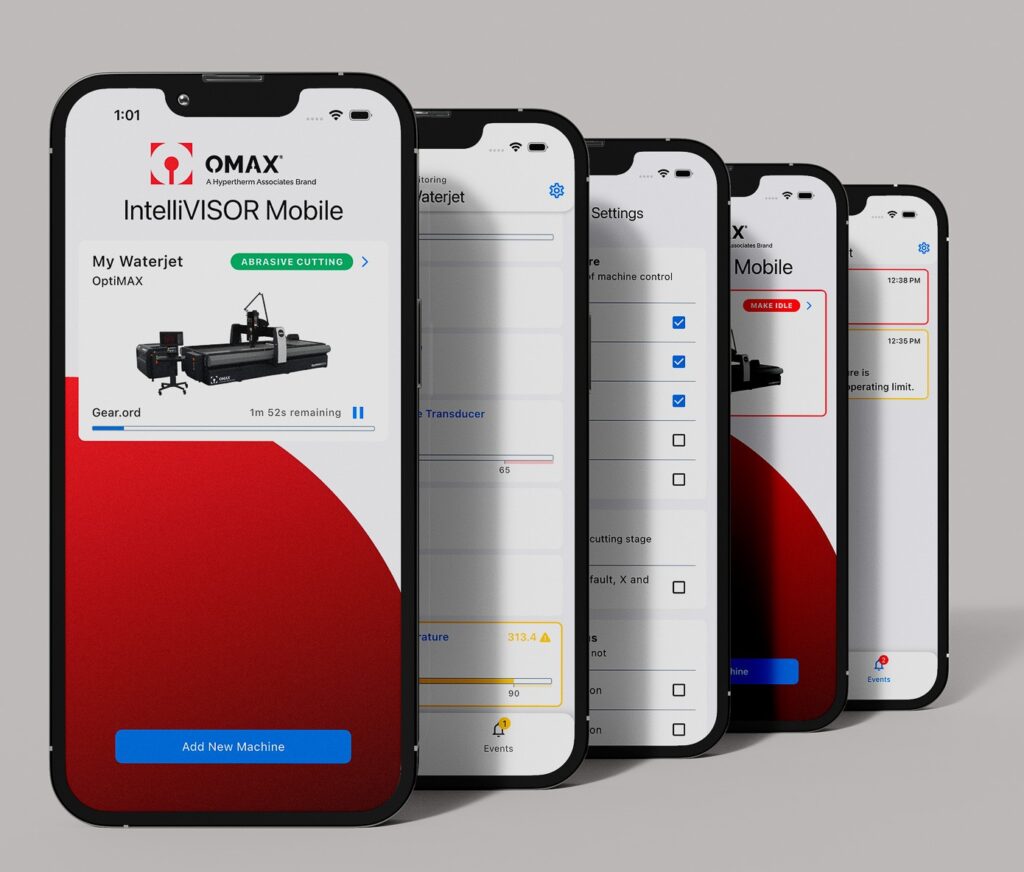
IntelliVISOR Mobile machine monitoring from OMAX
Digital workflows can provide information that supports planning, estimating, scheduling, and maintenance activities. For example, accurate cutting models can help improve quoting accuracy by providing realistic production estimates. Tools such as IntelliVISOR and IntelliVISOR Mobile can help OMAX users monitor machine status, performance, and maintenance needs, giving shops greater visibility into issues before they create downtime. That visibility can help managers identify patterns, plan maintenance more effectively, and make better use of available equipment and labor. Historical job data can also help shops better understand production trends and resource requirements.
This gives managers a clearer picture of what is happening across the operation and helps them make decisions based on data rather than assumptions.
In a competitive manufacturing environment, that information can be just as valuable as improvements in cutting performance.
Looking Beyond Machine Speed
Faster machines will always have value, but many manufacturers discover that their greatest opportunities for improvement come from optimizing the workflow surrounding the machine rather than focusing exclusively on cutting performance.
For OMAX waterjet users, digital workflows help connect people, processes, and equipment into a more efficient production environment. By reducing unnecessary handoffs, repeated data entry, and manual decision points, software helps teams spend less time managing the work and more time completing it. By automating routine tasks, reducing variability, and providing greater visibility into operations, software can help manufacturers improve productivity throughout the entire process.
For waterjet shops looking to remain competitive, the question is no longer whether software matters. The question is how much productivity is being left on the table without it.